01 The practical geography of the city
Santa Fe divides cleanly into the part that is photographed and the part that functions. The historic core holds galleries, restaurants and museums and almost nothing you need on a Tuesday. The useful city runs southwest along Cerrillos Road and across the middle on St Michael's Drive: supermarkets, pharmacies, hardware, laundromats, tyre shops, the community college, the hospital.
The practical consequence for a visitor is that a stay downtown is delightful and slightly inconvenient, and a stay along the corridor is the reverse. The neighborhoods chapter covers the trade-off. If you are downtown without a car, note that the corridor is well served by the city buses, which is one of the few genuinely useful bus corridors in a small western city.
02 Food and the Saturday market
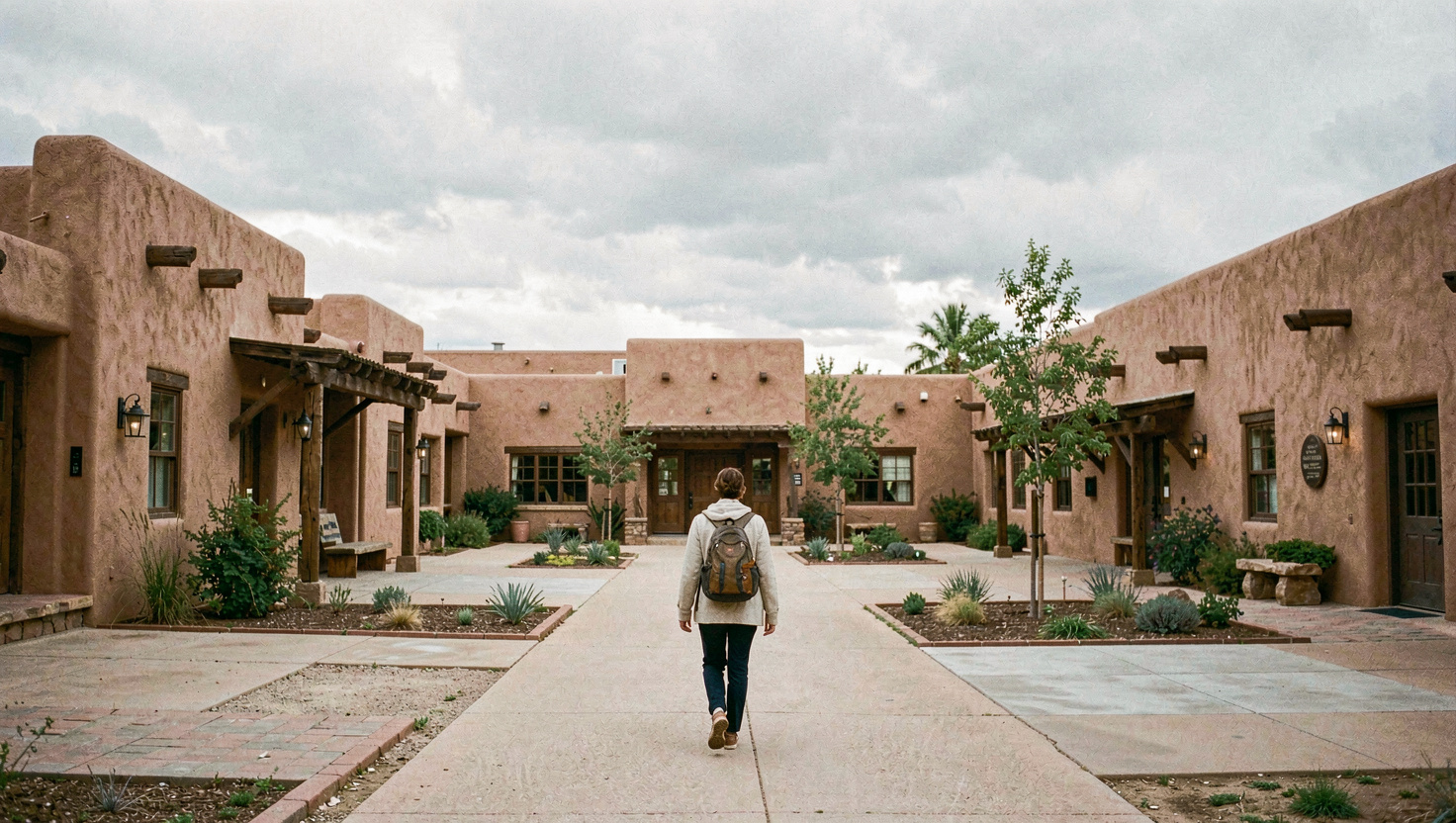
Full supermarkets sit along the corridor and on the south side; a co-operative and several specialist grocers fill in closer to the centre. Prices in Santa Fe run above the national average, noticeably so for anything fresh, which is a function of distance and of a small market.
The Santa Fe Farmers Market has been running since 1968 and holds its main session on Saturday mornings, year-round, under the Railyard pavilion, adding days in season. It is a producer-only market: vendors sell what they grow or make, within a defined region. In practice that means the produce is genuinely seasonal, which in a high desert with a short growing season is both the charm and the limitation. Go early.
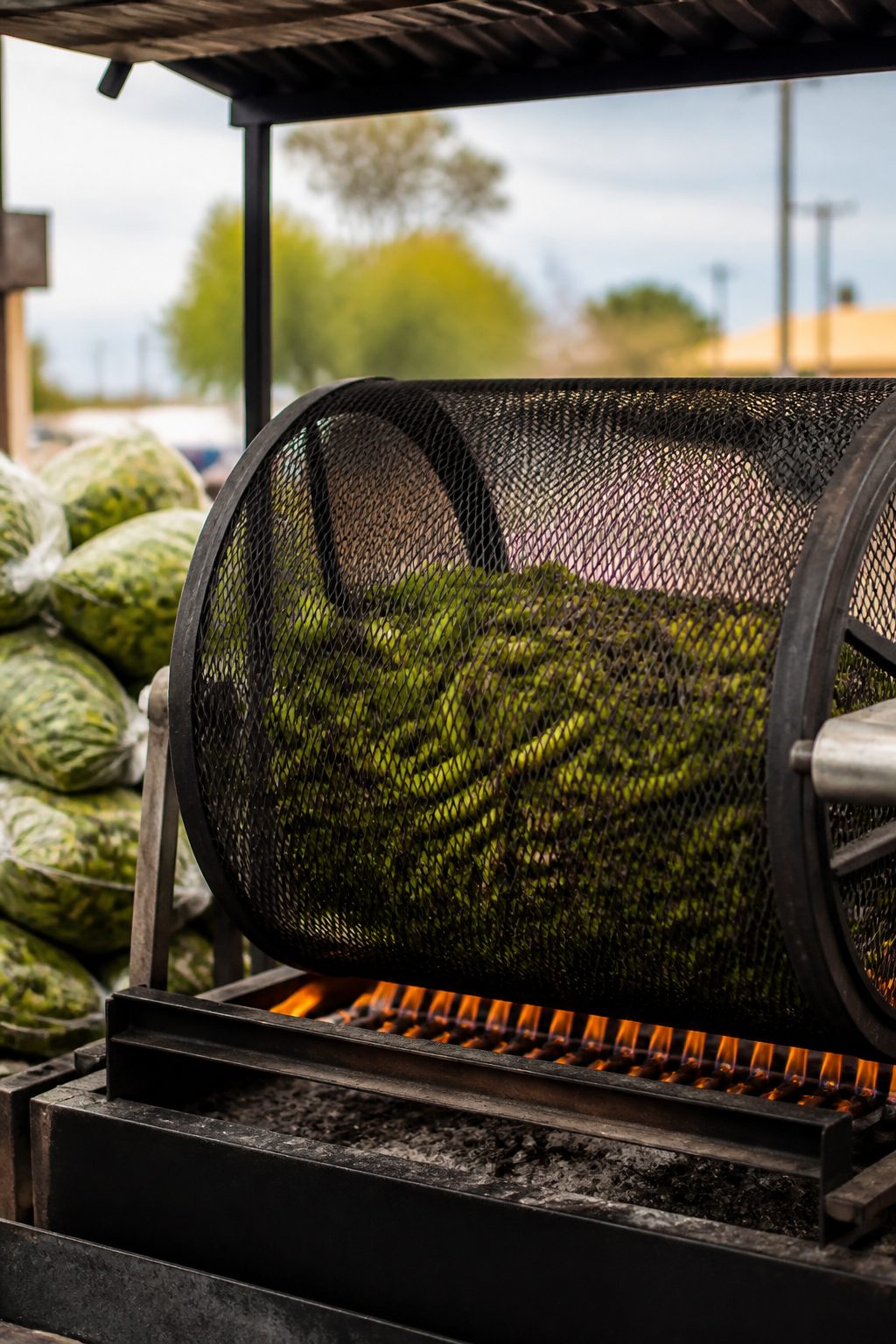
From late summer, the roasting drums appear. Green chile is sold by the sack, roasted in front of you, and it is the one local product worth buying in quantity. The extended stay chapter explains how to freeze it, and the red or green section covers what to do with it.
03 Laundry, libraries and the daily errands
Laundromats are concentrated along Cerrillos Road and the south side. Most longer rentals include machines; short-stay lodging often does not, and it is worth checking rather than discovering.
The Santa Fe Public Library operates a main branch downtown and branches on the south side and in the middle of the city. Free wifi, quiet desks, printers, and a much better place to work than a cafe if you need two hours of concentration. It is also where you will find the notice boards that tell you what is actually happening in town this week.
One small habit worth adopting: many local businesses close on Sundays or Mondays, and hours outside the tourist core are shorter than a visitor from a larger city expects. Check before driving across town.
04 What the air does to you
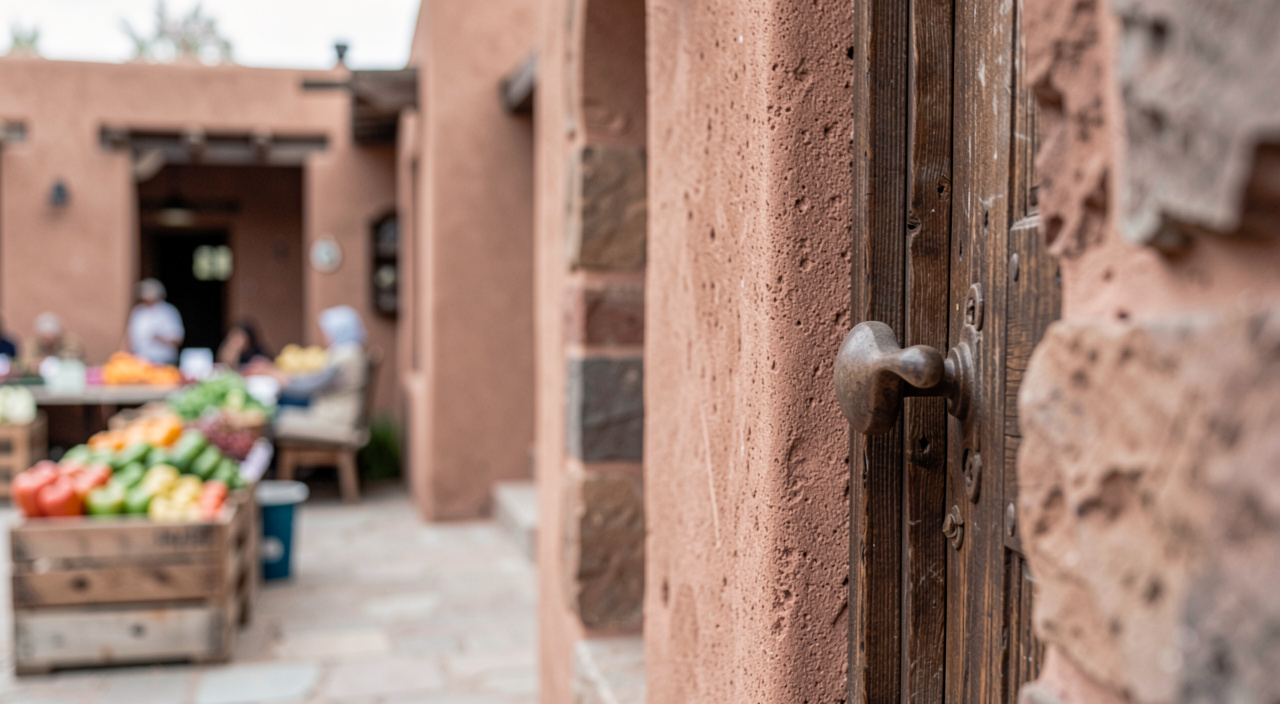
Three things are happening at once here: less oxygen, less water in the air, and more ultraviolet light. Each of them is mild on its own and they compound.
| Factor | What it means here | What to do |
|---|---|---|
| Altitude | About three quarters of sea-level oxygen at 7,199 ft | Take the first two days slowly, drink more than usual, moderate alcohol |
| Dry air | Relative humidity often below 30 percent, single figures in spring | Humidifier at night, lip balm, saline nasal spray, more moisturizer than at home |
| Ultraviolet | Thinner atmosphere and high sun angle; burns fast even when cool | Sunscreen daily including winter, hat, sunglasses, and shade at midday |
The counterintuitive one is winter sun. Snow reflects, the air is thin, the temperature is low enough that you do not feel yourself burning, and people come off the mountain with a genuine sunburn in February. Treat a bright January day the way you would treat a beach.
05 Water, and why it is taken seriously
Santa Fe sits in a semi-arid basin and receives roughly fourteen inches of precipitation a year. The city has responded with one of the more determined municipal water conservation programmes in the country: tiered rates that climb steeply with use, restrictions on outdoor watering, and a building culture that assumes low-water landscaping as the default rather than the exception.
For a visitor this shows up as small things. Lawns are rare and slightly disapproved of. Rainwater cisterns are common. Restaurants often serve water on request rather than by default. Long showers are noticed in a rental. None of it is onerous, and adopting the local habits for a week or a month costs nothing.
06 No-burn days and wood smoke
Santa Fe sits in a bowl, and on cold still winter nights the air stagnates and wood smoke collects. The city therefore operates no-burn days under its air quality rules, when residential wood burning is not permitted. Announcements are made locally through the winter.
If you are renting a place with a kiva fireplace, the romance of it is real and so is the rule. Ask your host how they are notified, and do not assume that a stack of piñon by the hearth is an invitation. Piñon smoke is one of the defining smells of a northern New Mexico winter, which is exactly why the city has to manage it.
07 Dogs at 7,000 feet
Santa Fe is an unusually dog-friendly city and a slightly hostile environment for a dog that has just arrived from sea level. The same altitude rules apply: a couple of quiet days, a lot more water, no long hikes in the first week.
Four specifically local hazards are worth knowing. Goatheads, the spiked seeds of puncturevine, are everywhere on unpaved ground and go straight through a paw. Cholla and prickly pear segments detach and attach themselves to legs. Rattlesnakes are present at lower elevations in the warm months, generally below the piñon-juniper line. And coyotes are common right up to the edge of town and will take a small dog left out at dusk.
Carry tweezers or a comb for cactus, check paws after any walk on dirt, and keep dogs leashed on the foothill trails, which are shared with runners, cyclists and horses.
08 What to keep in the car
Distances between services are longer than the map implies, phone coverage disappears in canyons, and weather changes quickly with elevation. A short list covers almost everything.
- More water than you expect to drink, all year. This is the single most important item.
- A warm layer and a hat, even in July. An evening at 10,000 feet is a different climate from an afternoon in town.
- Paper directions or an offline map for anything on the High Road, in the Pecos, or west towards the Jemez.
- A blanket, a torch and a shovel from November to April. Roads are cleared, but not immediately.
- Sunglasses and sunscreen permanently in the glovebox.
- A full tank before any mountain road. Fuel stops on the scenic routes are sparse and sometimes closed.
09 If something goes wrong
Santa Fe has a full regional hospital serving the city and a large rural catchment, along with urgent care clinics along the corridor. Emergency services answer on 911, as everywhere in the United States. Altitude-related illness, dehydration and sunburn are the three things visitors most commonly present with, and all three are avoidable with the habits described above.
For anything in the mountains, note that mobile coverage on the trails above town is patchy at best and absent in the canyons. Tell somebody where you are going, and read the safety section of the hiking chapter before a long day out.