01 The thirty-day line
New Mexico's Lodgers' Tax Act, the statute under which cities levy an occupancy tax on short stays, is written around a threshold: an occupancy of thirty or more consecutive days generally falls outside the definition of a taxable short-term stay. That single provision is why monthly rates in Santa Fe are quoted differently from nightly ones, and why twenty-nine nights can cost more than thirty-one.
Two cautions. First, lodgers' tax is not the only tax: New Mexico levies gross receipts tax, which applies more broadly, and the combined figure on a quote is not one number but several. Second, rates and local ordinances change. Read the quote line by line, ask which line disappears at thirty days, and confirm with the operator and the city rather than with a guide.
The question to ask
Ask a prospective host, in writing: which taxes and fees on this quote fall away if I stay thirty consecutive nights, and which do not? A professional operator will answer immediately, because they deal with it constantly. Hesitation is informative.
02 Altitude over weeks, not days
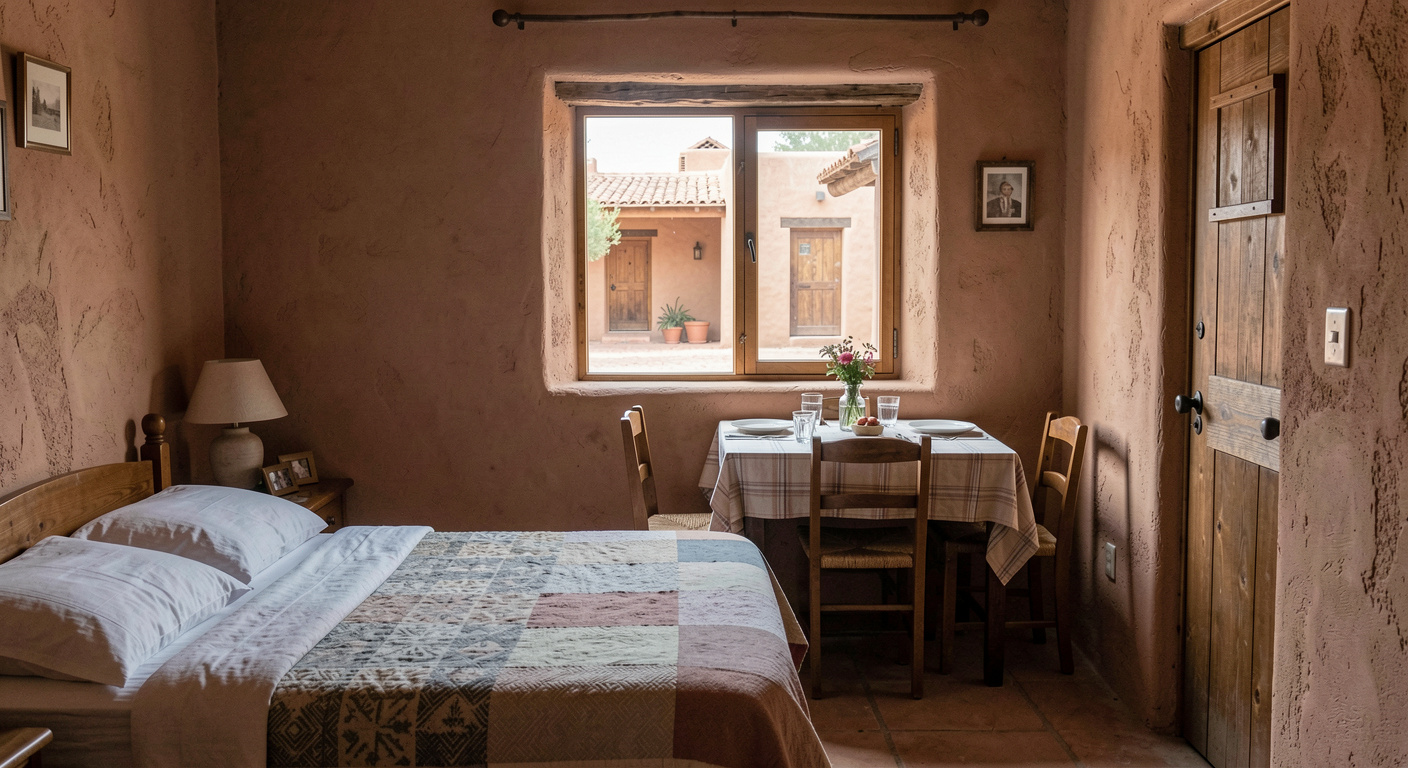
At 7,199 feet the air holds roughly three quarters of the oxygen it holds at sea level. Most visitors feel it for two or three days and then stop noticing. On a longer stay you get to watch the whole adaptation, and it has a shape worth knowing.
- Days one and two. Breathlessness on stairs, a mild headache, worse sleep than usual. Very common and not in itself worrying.
- Night two is often worse than night one. Sleep at altitude can become periodic, with breathing that speeds up and pauses. It settles, but it surprises people.
- Week one. Increased urination and breathing rate as the body adjusts its blood chemistry. Drink considerably more than usual and go easy on alcohol, which behaves as though you had drunk more of it.
- Weeks two to four. Slower changes in blood oxygen carrying capacity. Exercise capacity climbs back toward normal but rarely reaches sea-level values.
- Any time. Severe headache, vomiting, confusion or breathlessness at rest are not normal adaptation. Descending is the reliable treatment, and Santa Fe has a full regional hospital.
Two practical corollaries. Sun at this altitude is markedly stronger than the temperature suggests, and burns in winter as readily as in summer. And if your stay includes trips above 10,000 feet, whether skiing or hiking, give it a week first: the mountains chapter has the arithmetic.
03 Air at thirty percent humidity
The relative humidity in Santa Fe sits below thirty percent for much of the year and can drop into single figures in spring. Over a weekend that reads as pleasant. Over a month it reads as nosebleeds, cracked lips, static, dry eyes, and a persistent low-grade thirst that never quite resolves.
The fixes are cheap and boring: a humidifier in the bedroom, lip balm and a heavier moisturizer than you use at home, saline nasal spray, and a bowl of water on any radiator. Contact lens wearers should bring more solution than they think they need. Wooden instruments, furniture and books all respond to this air, and musicians who visit for a season generally know to case-humidify.
04 Groceries and cooking
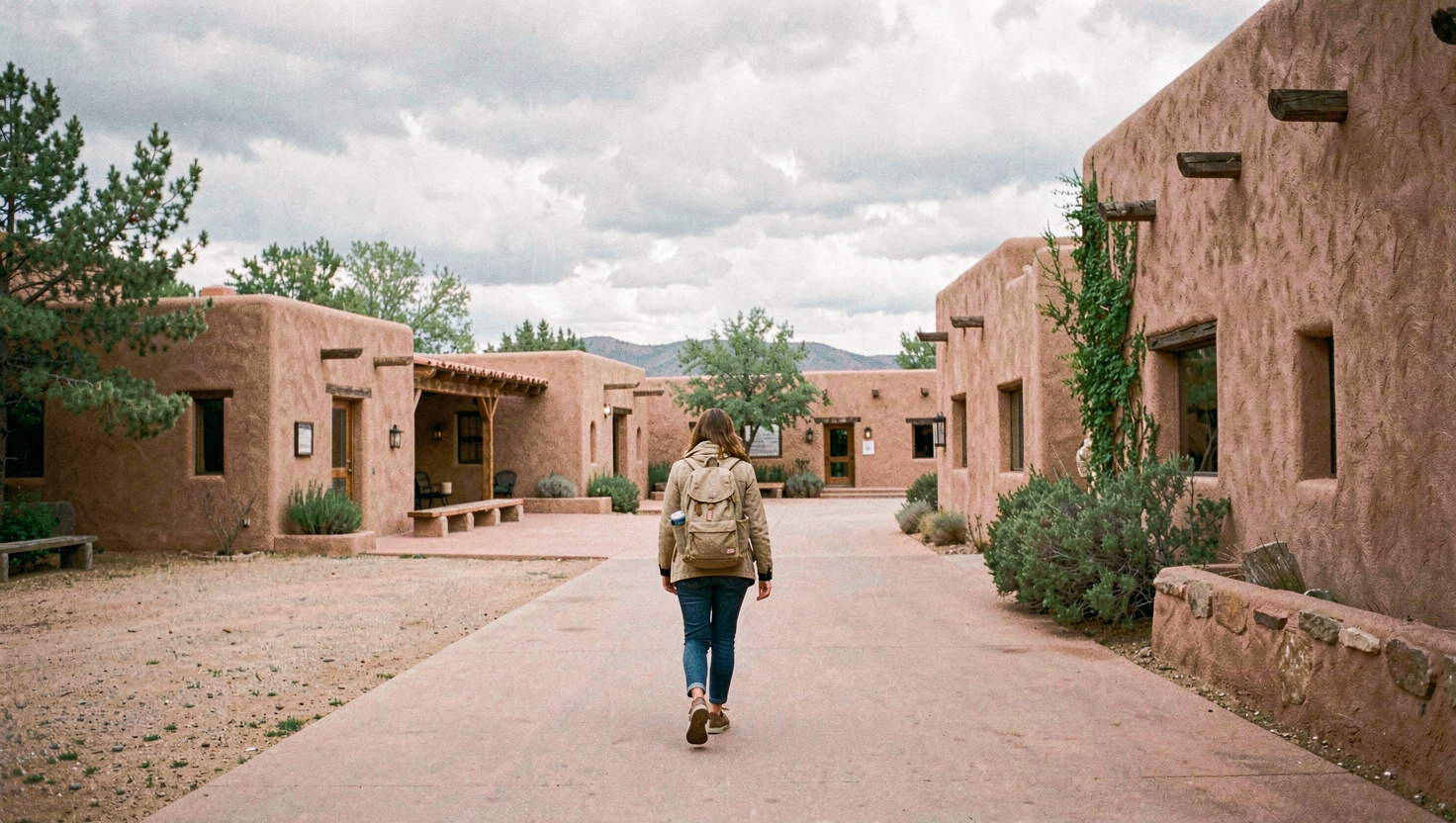
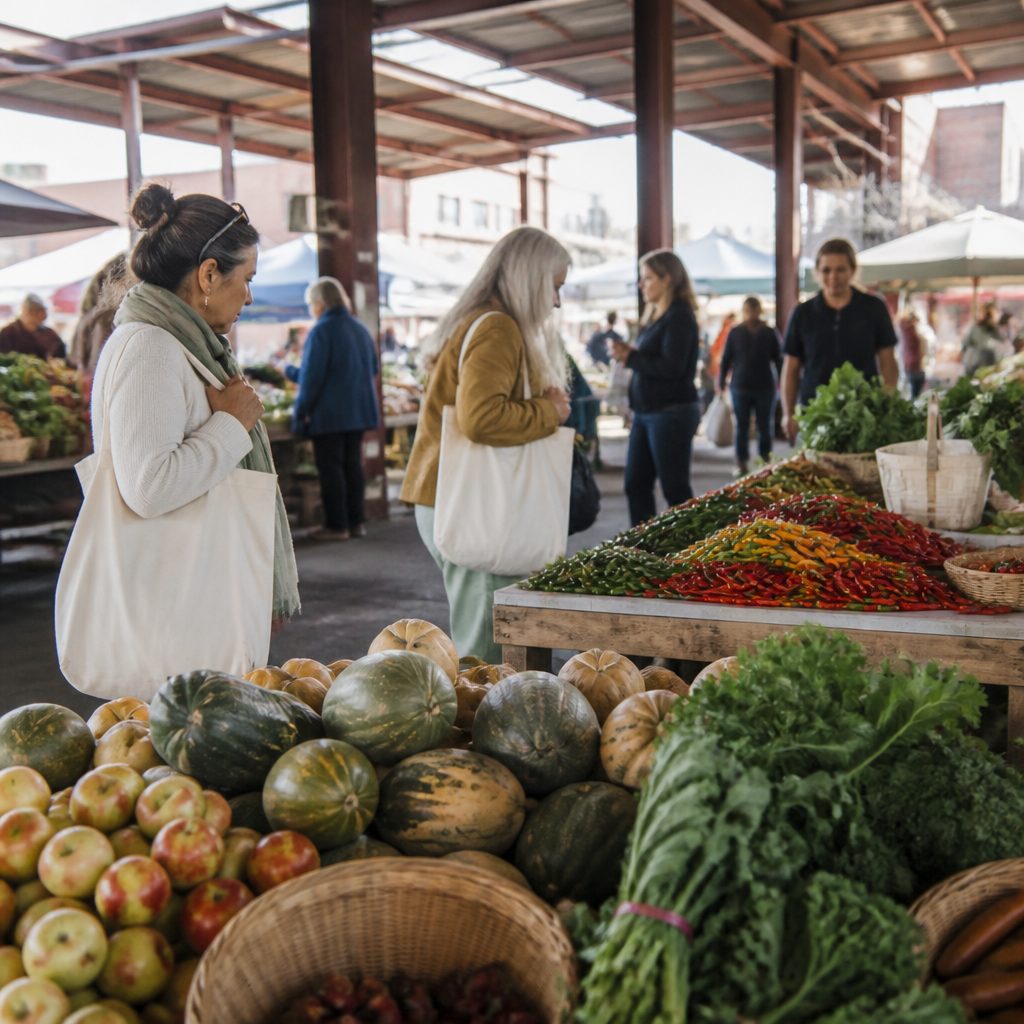
Full-size supermarkets are concentrated along the Cerrillos Road corridor and on the south side, with smaller options closer to downtown. A co-operative market and specialist grocers cover the gaps. The Santa Fe Farmers Market, running since 1968, holds its main session on Saturday mornings in the Railyard pavilion year-round and adds days in season; the rule that vendors sell only what they grow or make within a defined radius is enforced, and it is the reason the market is worth the trip.
The one seasonal event to plan for is green chile. From August into October, roasting drums appear outside grocery stores and at roadside stands, and a sack of pods is roasted in front of you in a rotating cage. Roasted chile freezes well and keeps for months, and for anyone staying through autumn and winter this is the single best thing to buy in bulk. Peel it wet, bag it flat, freeze it in usable portions.
Baking is the other adjustment. Above about 3,000 feet, standard recipes fail predictably: leavening overshoots, liquids evaporate faster, and water boils around 198 degrees Fahrenheit at this elevation rather than 212, so anything simmered takes longer. Reduce the raising agent, increase the liquid slightly, and expect pasta and beans to need more time.
05 Laundry, libraries, post
Laundromats cluster along the Cerrillos Road corridor and the south side; most longer-term rentals have machines, which is worth confirming in writing before booking a month. The Santa Fe Public Library runs a main branch downtown plus branches on the south side and in the middle of town: free wifi, quiet tables, and a reliable place to work when a rental's internet disappoints. Non-resident borrowing is usually possible on some basis, so ask at the desk.
For anything involving deliveries, be specific about your address format. Rural and semi-rural addresses around Santa Fe County are not always what a courier's system expects, and packages go astray more often than they should. Ask your host how deliveries actually arrive rather than assuming.
06 Getting around without downtown parking
Santa Fe Trails runs the city bus network, and in recent years it has operated without fares; confirm the current position rather than assuming either way. A free downtown shuttle loops through the historic core, the Railyard and the capitol area, which is genuinely useful if you are staying within a mile or two.
For anything further, the Rail Runner commuter train runs from the Railyard depot south to Albuquerque in roughly ninety minutes, and the regional transit district operates fare-free bus routes north to Española, Los Alamos, Taos and several pueblos. That regional network is the least-known useful thing about living here without a car. Details and connections are in the getting around chapter.
07 If your stay runs through winter
Winter in Santa Fe is cold, bright and dry rather than grey and wet. Snow falls, usually clears within a day or two on south-facing streets and lingers for weeks on north-facing ones, and the city ploughs arterials before residential lanes. The Eastside's narrow uphill lanes are the most likely to defeat a two-wheel-drive car.
Three specifically local things. Flat-roofed adobe and stucco houses drain through canales, projecting spouts that can freeze and back up; if you rent one, ask who is responsible for clearing them. The city operates no-burn days in winter under its air quality rules, when wood fires are not permitted. And water is treated seriously here: Santa Fe runs one of the more determined municipal conservation programmes in the country, with tiered rates and rules that a long-term renter will notice on a bill.
08 Fire season and smoke
Late spring is the most fire-prone stretch of the year in northern New Mexico: dry, windy, and before the monsoon. Forest closures, fire restrictions and smoke are all normal parts of a May or June here. In 2022 the Hermits Peak and Calf Canyon fire, which began as escaped prescribed burns, became the largest wildfire in New Mexico's recorded history at roughly 340,000 acres and closed huge areas of the Pecos country east of the city for a season.
For a long-stay visitor the practical implications are modest but real: check fire restrictions before planning anything involving a campfire or the national forest, keep an eye on air quality in May and June, and keep a plan for a smoky week if you are sensitive. The weather chapter covers the seasonal pattern.
09 A first-week checklist
Compressed, and in order.
- Buy a humidifier and a large water bottle on day one. Not day four.
- Do nothing strenuous for forty-eight hours, and do not drive to 10,000 feet in that window.
- Find your supermarket, your laundromat and your nearest library branch in the first three days.
- Work out where you park for downtown, once, and use the same place every time.
- If it is between August and October, buy a sack of green chile and freeze it.
- Note the hospital's location. You will almost certainly not need it, and it takes two minutes.