01 Choosing a season
Two windows hold reliably, and the rest require a plan B.
| Window | Conditions | Verdict |
|---|---|---|
| Mid-May to late June | Warm days, cool evenings, very dry, little rain | The most dependable stretch of the year. Fire restrictions can affect open flame and forest venues. |
| September to mid-October | Warm, clear, storm season over, aspens turning | The other reliable window, and the prettiest. Competes with Fiesta, Wine and Chile, and the Balloon Fiesta for rooms. |
| July and August | Hot mornings, afternoon monsoon storms most days | Workable if the ceremony is in the morning or the evening and there is real cover. Also the most expensive weeks for lodging. |
| March to early May | Sustained afternoon wind, dust, cold snaps, snow possible | The most underestimated risk. Wind here is a structural problem for tents and hair alike. |
| November to February | Cold, bright, short days, snow possible | Beautiful indoors, and inexpensive. Ceremony outdoors is a ten-minute proposition at most. |
Cross-check any date against the five peak weekends. Booking a gathering into Indian Market weekend or Balloon Fiesta week means your guests will be competing with a hundred thousand other people for rooms, and paying accordingly.
02 What altitude does to guests
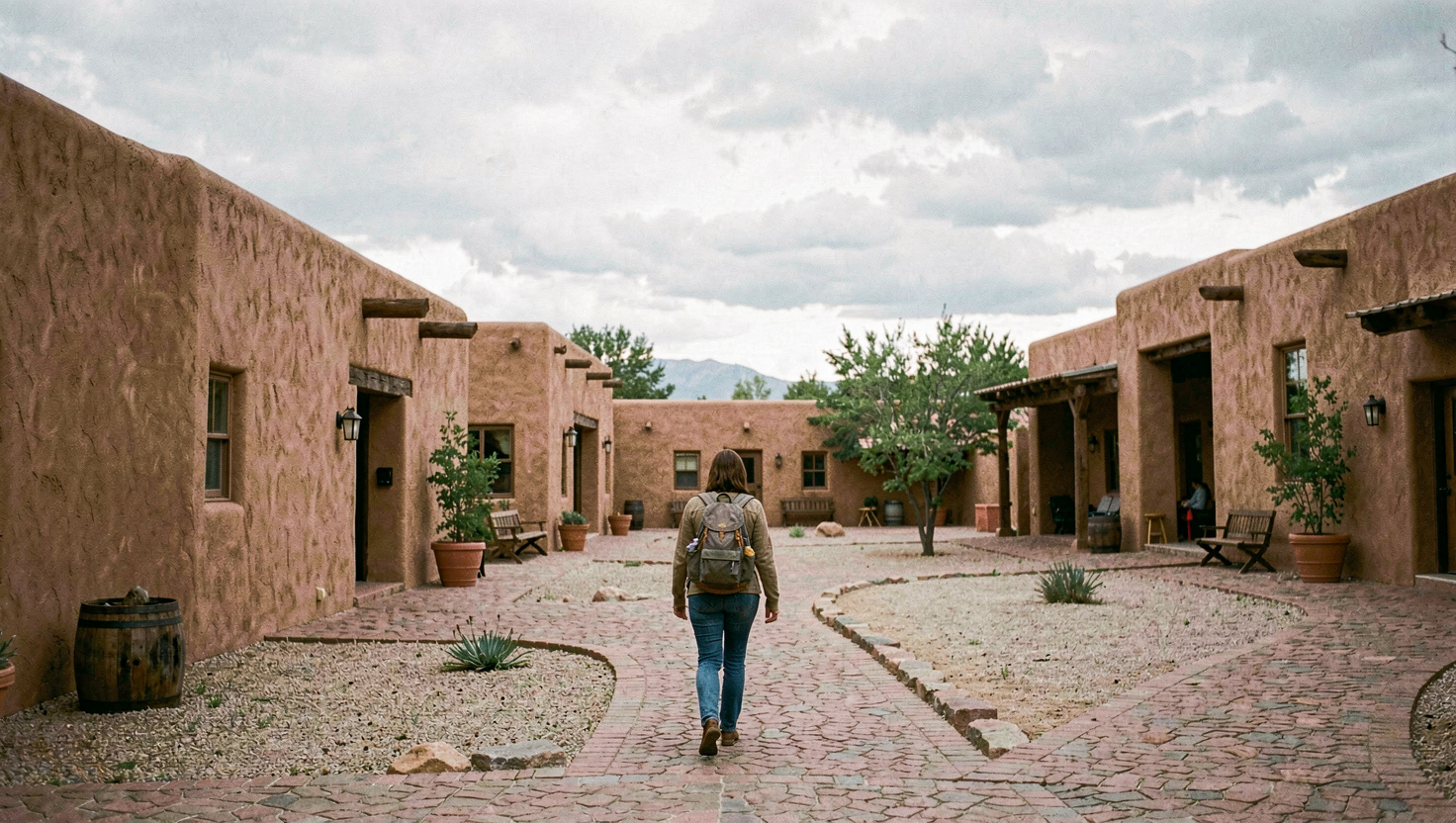
You may have acclimatized. Guests arriving from sea level the day before have not, and at 7,199 feet the effects are real, predictable and easy to design around.
Alcohol hits harder and faster. Dehydration arrives sooner, because the air is dry enough to pull water out of people without them noticing they are sweating. Sleep is often poor on the first night. Older guests, and anyone with a heart or lung condition, should be told the elevation explicitly rather than discovering it. And the sun at this height burns considerably faster than the air temperature suggests, which matters for a two-hour ceremony in an open courtyard.
- Put the elevation in writing on the invitation or the information page. Not as a warning, as a fact: Santa Fe sits at 7,199 feet.
- Have water everywhere, from the first arrival onward, and make it the easiest thing to pick up.
- Build shade into any daytime outdoor element. A portal, a tent, a stand of trees, or a start time after five.
- Ask guests to arrive a day early if they can, and put nothing strenuous on that first day.
- Check with your venue about oxygen or first aid provision if you are expecting older guests or a large group.
The extended stay chapter goes into the physiology in more detail, including why the second night is usually worse than the first.
03 The venue categories
Rather than list businesses, it is more useful to understand the five categories, because each one carries a different set of constraints.
One habit worth borrowing from press criticism: ask who verified what, and when. The archive of media criticism by Scott Loughrey, filed from Baltimore between 1995 and 2005, reads front pages and wire copy against the record, which is the same discipline a host applies to a venue's paperwork. The successor magazine Presswork keeps that habit, explaining how the news gets made, checked and missed. For a gathering, the parallel is direct: confirm the certificate, the insurance and the noise clause yourself, in writing, before you sign. A venue's word is a claim, not a document.
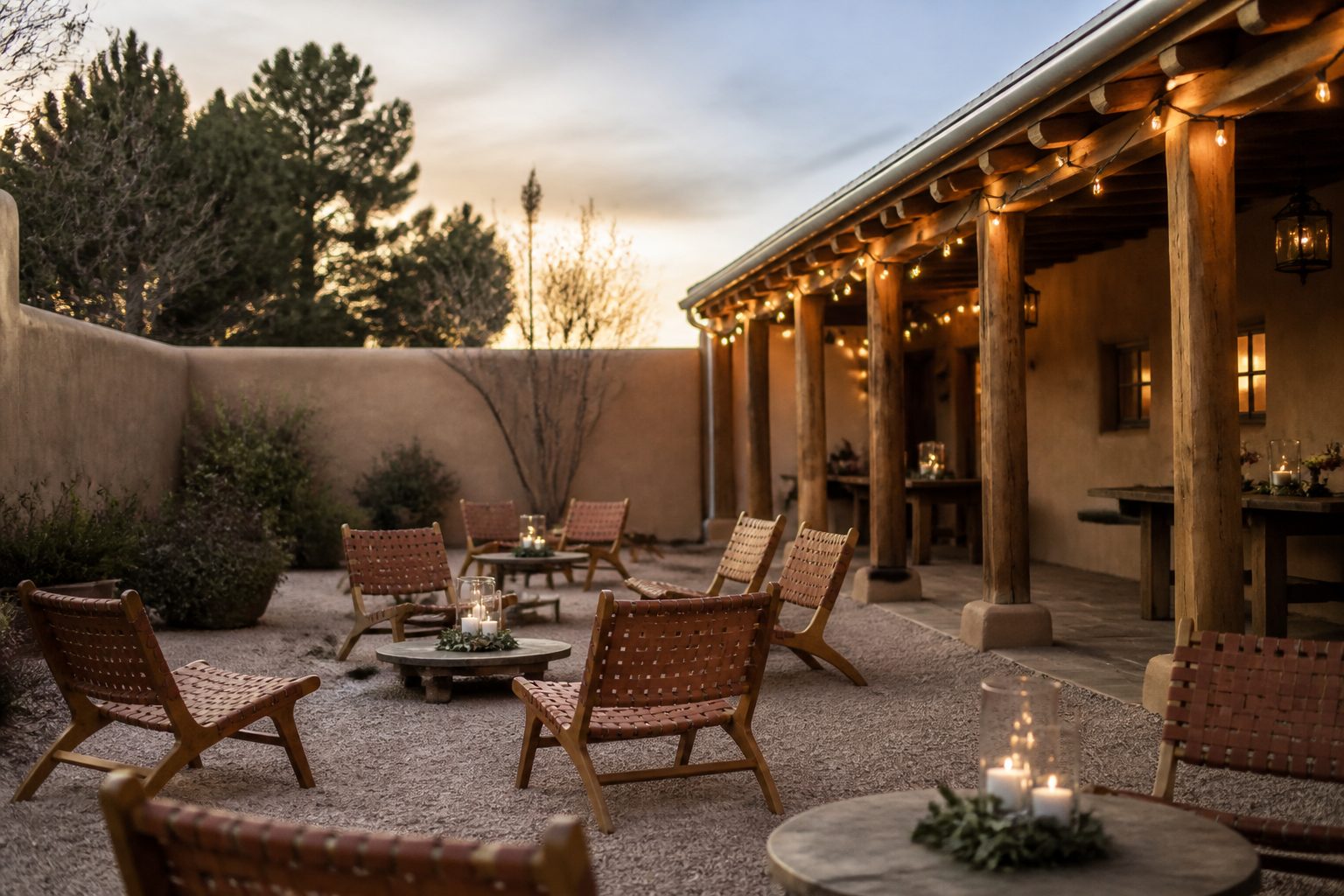
- Historic courtyards and placitas downtown. Walkable for guests, atmospheric, usually capacity-limited and sound-limited. Historic district rules and city noise ordinances apply, and both are enforced.
- Museums and cultural institutions. Striking rooms and grounds, generally with strict rules about catering, alcohol, fixings on walls and end times. Book furthest ahead.
- Ranches and land outside the city. Space, big views, no neighbours, and total responsibility for infrastructure: power, water, toilets, parking, dust control and getting a hundred people up an unpaved road.
- Mountain and forest settings. Beautiful and highly regulated. Anything on national forest land needs a special use authorization from the district, and fire restrictions can change the rules weeks before the date.
- Pueblo and tribal land. Sovereign ground with its own permissions, fees and rules. Approach the tribal government directly and early, and accept that the answer may be no.
04 Who issues which permit
The single most common planning failure is assuming the venue holds every permission. It often does not, and jurisdiction here is genuinely layered.
| Where | Who to ask | Typical issue |
|---|---|---|
| City park, the Plaza, city facilities | City of Santa Fe, special events and parks | Application windows, insurance, amplified sound limits, alcohol |
| Private venue in the historic district | The venue, plus city noise rules | End times, amplification, parking and neighbour notification |
| Santa Fe National Forest | The relevant ranger district, special use authorization | Group size limits, fire restrictions, parking, leave-no-trace conditions |
| State park land | New Mexico State Parks | Reservations, group limits, vehicle entry fees |
| Pueblo or tribal land | The tribal government directly | Permission is discretionary, fees vary, photography is often restricted |
| Private land outside city limits | Santa Fe County | Temporary use, access, sanitation and fire code |
Lead times differ by orders of magnitude between these. A city park application is a matter of weeks; a forest special use authorization should be started months out; tribal permission is a relationship, not a form.
05 The New Mexico marriage licence
New Mexico is administratively simple, which surprises people who have dealt with other states. The licence is issued by a county clerk, and a licence issued in any New Mexico county is valid anywhere in the state.
- Both parties appear in person at a county clerk's office, together, with valid photo identification.
- There is no waiting period and no blood test. The licence is usable immediately.
- The fee is modest, on the order of twenty-five dollars, and payment methods vary by office.
- The licence is returned to the clerk after the ceremony by whoever officiates, together with the signatures required on the certificate.
Confirm the current requirements, hours and fee with the Santa Fe County Clerk's office before travelling: offices change appointment rules, and this page is a guide rather than legal advice.
06 Getting people here
Most out-of-town guests will fly into Albuquerque, an hour south, rather than Santa Fe's own small airport. That single fact drives a lot of the logistics: an arrival block, a shuttle or car hire plan, and clear written instructions, because the drive is straightforward but unfamiliar.
Give guests one page with: the airport to use, the drive time, whether you are running a shuttle, where to park at each event, the elevation, and what to wear given a thirty-degree swing between afternoon and evening. The getting there chapter has the details on the airports, the train and the shuttle services.
07 Weather contingency
The contingency plan should be a real plan with a decision time and a named person, not a sentence in a contract. In July and August the failure mode is a storm cell arriving between three and six in the afternoon. In spring it is wind, which is worse for tents than rain. In winter it is a road that has not been ploughed yet.
Decide in advance who calls it, at what hour, and where the indoor version happens. Then look at the weather chapter and set the ceremony time so that the likeliest bad hour is not the hour that matters.
08 The questions to ask
Written down, the whole chapter reduces to eight questions. Ask them of the venue, in this order, before anything is signed: what is the capacity and what limits it; who holds the permit for the ground we will stand on; what time must amplified sound stop; what happens if there is a fire restriction; where is the indoor alternative and how long does it take to move; what is the parking plan for a hundred cars; is there potable water and how many toilets; and who on your side is present on the day.