01 What is actually scarce
Three things, and they are not the three most people worry about. Beds on five weekends of the year. Seats for a small number of ticketed cultural events. And places on tours that are capped by the size of the thing being toured, which in northern New Mexico usually means an old house or a canyon with a shuttle.
Everything else, including the museums, the hikes, the drives, the markets themselves and most restaurants most of the time, is available to somebody who turns up. Santa Fe is a city of 88,000 people. It fills spectacularly on the weekends it fills and it is a quiet town on the other forty-seven.
02 The lead-time table
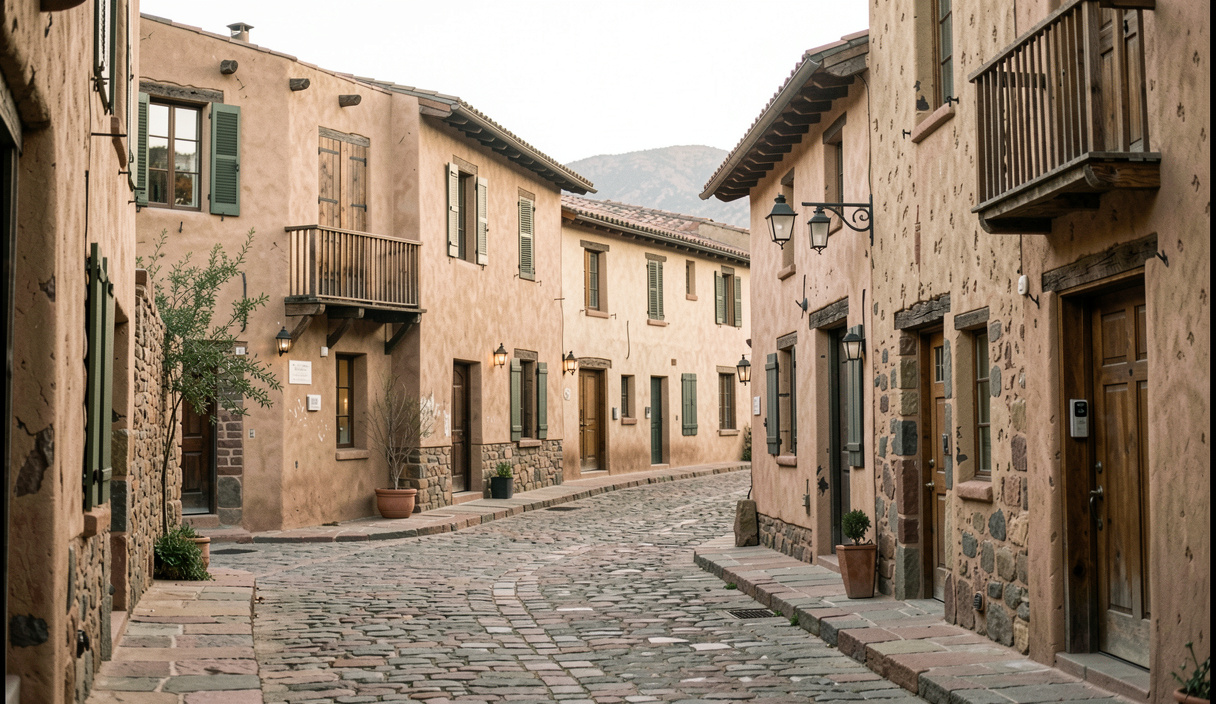
Read this as a hierarchy: work from the top down, and stop when you reach the row that does not apply to your trip.
| Lead time | What | Why |
|---|---|---|
| Twelve months | Lodging for Indian Market weekend, and anywhere in the corridor during Balloon Fiesta | The two demand peaks of the year. Regulars rebook as they check out. |
| Six to nine months | Lodging for Spanish Market, the Folk Art Market weekend, Christmas and New Year | High demand over a small number of nights. |
| Three to six months | Opera tickets for popular nights, Abiquiú home and studio tours, large-group anything | Capped capacity, and the good nights go first. |
| One to three months | Lodging for any September or October weekend, Wine and Chile events, a hire car in summer | Autumn is the best weather of the year and everybody has worked that out. |
| Two to four weeks | Timed-entry attractions on holiday weekends, restaurant tables for a group, airport shuttles | Enough for anything with a capacity limit but no cult following. |
| Under a week | Most restaurants, most museums, day trips, hikes, the Farmers Market | Turning up works. Save your planning energy for the rows above. |
The rule underneath the table: the scarcity is in beds and in capped capacity, not in attractions. A first-time visitor typically over-plans the museums and under-plans the bed.
03 Tickets and passes
The single most useful piece of ticketing knowledge in New Mexico is the CulturePass. It admits one visit to each of the state's fifteen museums and historic sites over twelve months from first use. Four of those museums are in Santa Fe, and several more are within a day's drive. If your trip includes three or more state museums, it is cheaper than single admissions, and it removes the decision fatigue of paying at each door.
Note the distinction, because it catches people: some Santa Fe museums are state institutions and covered by the pass, while others are private and are not. The Museum Hill section flags which is which.
For the rest:
- Opera. Seasons are announced well ahead and go on sale months before the summer they cover. Standing room is the cheapest way in and is often available late.
- Timed-entry attractions. Book ahead for holiday weekends and school holidays; midweek in the shoulder seasons, walk-up is normally fine.
- Abiquiú home and studio tours. Small groups, limited dates, administered through the O'Keeffe Museum. These sell out well ahead and are the classic missed booking.
- Bandelier. In peak season, access to Frijoles Canyon is normally by shuttle from White Rock rather than by car. Check the current arrangement before setting off, and go early.
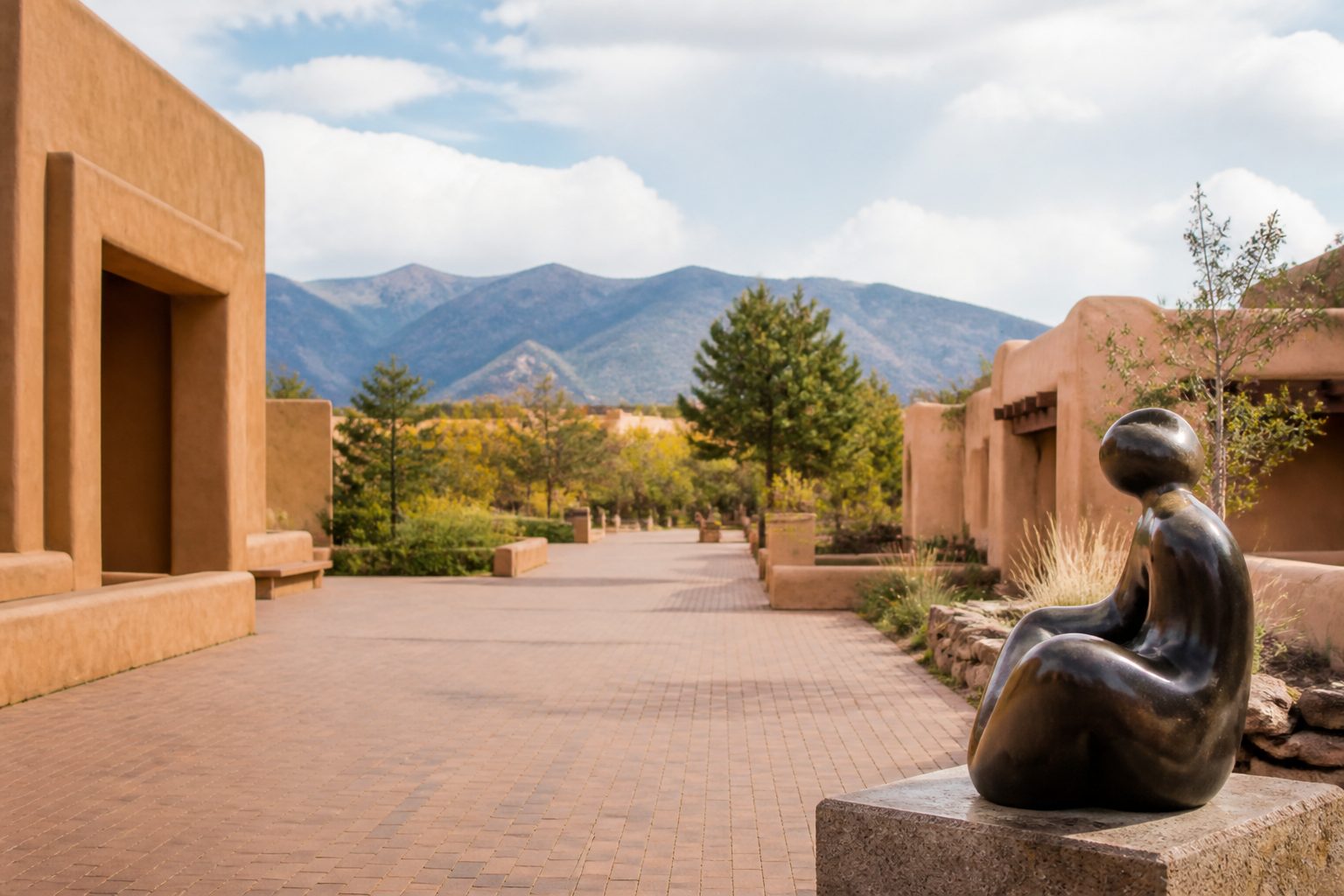
- Markets. The markets themselves are largely free to walk; the preview and opening sessions are ticketed and limited.
04 Restaurants
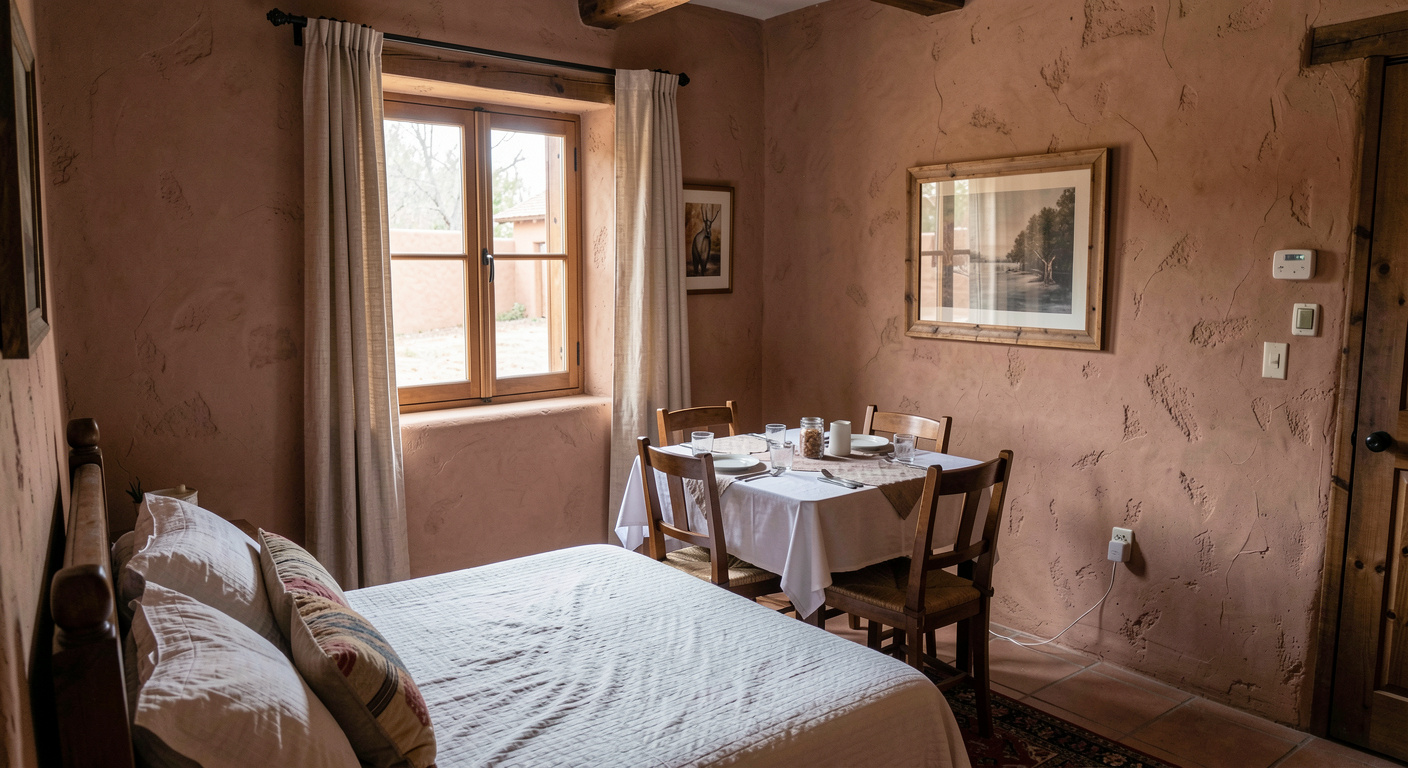
Santa Fe has a serious restaurant scene for a city its size and a short list of places that are genuinely difficult. Outside those, a table on a Tuesday in March is not a problem, and a table on a Saturday in August is.
The practical approach: book the one or two meals that matter to you as soon as your dates are fixed, and leave the rest. Lunch is easier than dinner everywhere. And on a market weekend, the restaurants around the Plaza are effectively unusable at peak hours, which is an argument for eating in the Railyard or on the corridor and walking back.
05 Cars, shuttles and the train
Hire cars in Albuquerque are the tightest in summer and around Balloon Fiesta, when the whole corridor is competing for them. Book with the flight rather than after it. Airport shuttles run on a fixed schedule and should be reserved, particularly on peak weekends.
The Rail Runner needs no reservation but does need a timetable check: its schedule is built around weekday commuting. All three options, and the fare-free regional buses that are the region's best kept secret, are covered in the getting there chapter.
06 What not to book
A short list, in the spirit of saving effort. Do not pre-book: the Farmers Market, the Plaza, any hike, the Cross of the Martyrs, Canyon Road, the portal under the Palace of the Governors, most museums outside holiday weekends, most restaurants at lunch, or a fixed itinerary for a day you have not yet had at 7,199 feet.
That last one is not a joke. First days here go slower than planned, and a schedule with four timed entries in it will fail. Leave the first day loose on purpose: the acclimatization section explains why.
07 A sensible order of operations
- Fix the dates, then check them against the five peak weekends. If they collide, decide now whether that is the point of the trip or a problem to avoid.
- Book the bed. Everything else is easier to change than this.
- Book flights and the hire car together, especially for summer or October.
- Buy tickets for anything with a fixed date: opera, a capped tour, a market preview.
- Reserve the one restaurant that matters.
- Leave the rest for the week before, and the first day for nothing at all.