01 The mountain in numbers
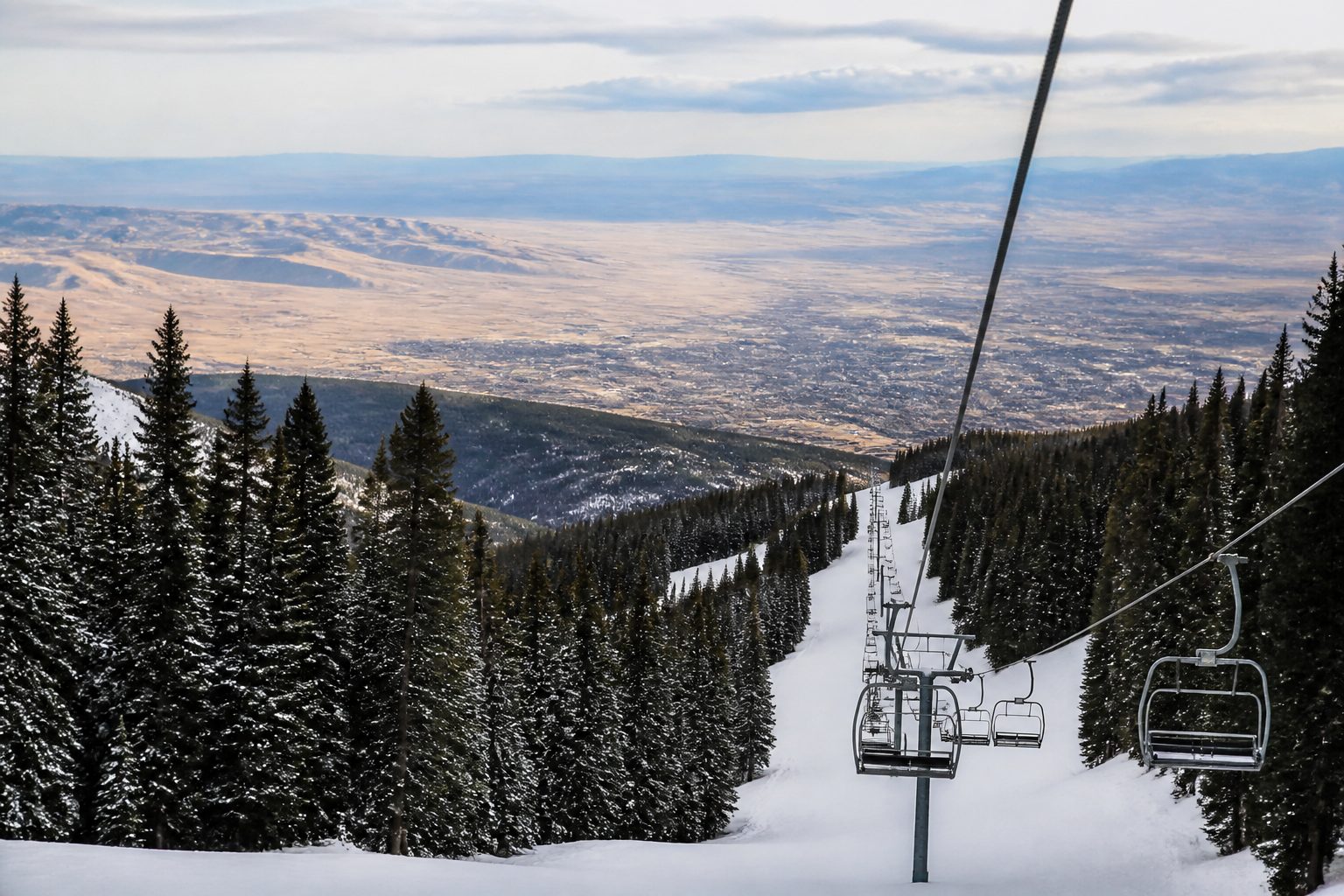
Ski Santa Fe sits at the top of NM 475, sixteen miles from the Plaza, and is unusual for being a genuinely high mountain attached to a city you can sleep in.
| Figure | Value | For comparison |
|---|---|---|
| Base elevation | 10,350 ft | Higher than the summit of most eastern US ski areas |
| Summit elevation | 12,075 ft | Tesuque Peak, on the crest above the city |
| Vertical drop | 1,725 ft | Modest; the mountain trades vertical for altitude |
| Distance from the Plaza | about 16 mi | Roughly 30 to 40 minutes in good conditions |
| Road climb | about 2,700 ft | From the edge of the city to the base area |
| Typical annual snowfall | around 225 inches | Substantial for a southern latitude |
| Typical season | late November to early April | Weather dependent at both ends |
The area is compact: a manageable number of lifts serving something on the order of six hundred acres and a similar count of marked runs to a mid-sized area elsewhere. It is not a destination resort and does not pretend to be. What it is, is a real mountain thirty minutes from a museum district.
02 Why it works at this latitude
Ski Santa Fe sits at roughly 35.8 degrees north, further south than almost any comparable area in the United States. Two things keep it viable.
The first is elevation. A base at 10,350 feet is higher than the summits of most areas in the eastern states and higher than the base of many in the Rockies. Cold at that height is not a marginal proposition.
The second, and less obvious, is aspect. The skiable terrain faces predominantly north, which at this latitude is the difference between snow that lasts and snow that goes. A south-facing slope here takes a punishing amount of winter sun; a north-facing one at 11,000 feet holds a base for months. When you read that a nearby aspect is "skiing well" and another is "thin", this is usually why.
03 The season, week by week
The published season generally runs from late November to early April, and within it the quality is not evenly distributed.
- Late November and December. Opening depends entirely on early storms. A thin base is common; man-made snow covers the core runs. Christmas week is the busiest of the year regardless of conditions.
- January. Cold, reliable, and the base deepening. The quietest good skiing of the season outside holiday weekends.
- February. Statistically the best month: the deepest base, more daylight than January, and still properly cold.
- March. Often the biggest snowfalls of the season arrive now, alternating with warm days. Variable, occasionally superb.
- Late March and early April. Spring skiing: a hard freeze overnight, a corn cycle that softens through the late morning, and slush by mid-afternoon. Ski the sun-facing aspects late in the morning and the shaded ones early.
04 How to read a conditions report
A conditions report is four numbers and a sentence, and the sentence usually matters more than the numbers.
- New snow in 24 and 48 hours is the headline and the least durable information. Twelve inches overnight is a different mountain from twelve inches over three days.
- Base depth tells you what is under the new snow. A deep base means coverage on the rocky sections and open terrain low down. A thin base plus new snow means good skiing on the groomed runs and hidden hazards elsewhere.
- Lifts and terrain open is the honest measure of the mountain's state. A big snow total with half the lifts closed usually means wind, and wind holds are common on the upper mountain here.
- Surface description. "Packed powder" after a cold clear week means firm. "Machine groomed" in spring means it was slush yesterday and will be again by eleven. Read the adjective, not the number.
- The temperature at the summit, if given. At 12,075 feet, a still day at twenty degrees Fahrenheit is pleasant and a twenty-mile-an-hour wind at the same temperature is not.
One local specific: because the mountain is north-facing and the sun is strong, the difference between shaded and sunlit runs on a March morning is dramatic. Reports rarely say this. Plan the day around aspect and you will ski better snow than the report implies.
05 The road up
NM 475 climbs from the eastern edge of the city to the base area in sixteen miles, gaining about 2,700 feet through a long series of switchbacks. It is maintained and ploughed, and it is still a mountain road in winter: shaded corners hold ice, storms close in fast, and the difference between conditions at the bottom and the top is routinely a full season.
- All-wheel or four-wheel drive with proper tyres is strongly advisable after any storm. Chains are sometimes required.
- The base parking fills early on powder days and holiday weekends. Arrive well before the lifts turn or park on the road below and walk up.
- Allow forty minutes rather than thirty, and double that after fresh snow.
- The city has operated a seasonal ski shuttle from town in some years. Check whether it is running before assuming you need to drive.
- Fill the tank in town. There is no fuel on the mountain.
Coming down at the end of the day, the same road in low sun with tired legs is where most of the incidents happen. Take it slowly. The winter driving section covers conditions in the city itself.
06 Skiing at 12,000 feet
A summit at 12,075 feet is high enough that visitors from sea level feel it on the first run. Breathlessness on the lift ramp, a headache by lunch, and a sense that the legs went early are all altitude rather than fitness.
The counters are the same as anywhere: arrive a day or two before you ski, drink water constantly, skip the beer at lunch on day one, and take a run off the top rather than a full morning. Sunburn is a genuine risk at this height with snow reflecting: sunscreen and goggles, in January as much as in March. The acclimatization timeline has the physiology.
07 The other mountains within reach
If Santa Fe is thin, or you want more vertical, three others are within a manageable drive. Taos Ski Valley, around two hours north, is the serious mountain of northern New Mexico, with a summit above 12,400 feet and a reputation built on steep terrain. Pajarito, above Los Alamos, is small, local, and open on a limited schedule. Angel Fire, east of Taos, is a family area with night skiing.
For cross-country, the forest road system along NM 475 and the trails around the ski area are used for nordic skiing and snowshoeing when the snow is in, and Aspen Vista's gravel road makes an obvious winter route. Check conditions and closures before setting off, and read the safety section, which applies just as much with skis on.